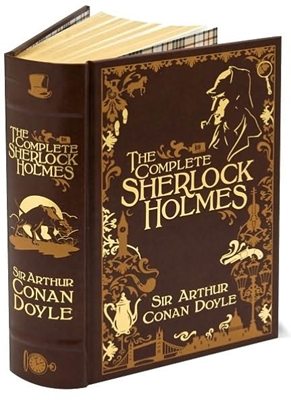
I struggled this week, coming up with something witty and interesting to write about, I'll be honest.
I suppose I'll start with, I began looking at Sherlock how we did Romeo & Juliet. What do we keep and what do we leave out to create a story based on Sherlock.
The primary things I've noticed now, after watching the episode of Elementary this week, is that the story is much more Sherlock when some form of abuse is included. Which I suppose makes Sherlock a big PG-13, but every version of Sherlock we've seen to date incorporates an element of substance abuse. Another thing is that Sherlock must be an abrasive arse for him to come across as himself. If he's not abrasive, it doesn't seem to work as well. It's self-explanatory that there must be a mystery to solve, and every great Sherlock must have a Watson of some sort.
Then I started thinking about which of these are fanfictions, which are parodies, and which are interpretations. I personally feel like every Sherlock we've watched or talked about has come off quite a lot like a fanfiction. Every story takes elements that the director or writer wants, and adds it in. Elementary is a cross between a fanfiction and an interpretation, and Robert Downey Jr.'s Sherlock movies are pretty much a straight fanfiction to me. BBC's Sherlock, though, has me debating. It's definitely part fanfiction, it deviates enough to have its own identity, but maintains the stories, which I suppose makes it an interpretation. I find that it leaves me with a bit of a sour taste in my mouth after an episode, though.
Now I'm wondering what else to think about, what else to talk about.
In London, when these stories were being published, I think I would have been one of the people walking about with a black armband after Sherlock was "killed". If his adventures were my form of stress relief, to have that taken away so abruptly would be a pretty big mood-killer. I empathize with them, as not only was Sherlock entertainment, but he was relatable, and an idol to most of his readers.
As we just watched Elementary though...
I LOVE this Watson. She is smart, and easily a good role model for girls. She has heart, a career, and she has flaws. Plenty of stories never go into the flaws, but we are only watching the second episode and we find out she left her career as a successful surgeon after a mishap with a patient. Dun dun dun... I honestly am considering getting the rest of the seasons to binge watch because I enjoyed it so much.
Showing posts with label Sherlock Holmes. Show all posts
Monday, March 6, 2017
Sunday, March 5, 2017
Feelings? What are those?
I enjoyed watching this episode of Elementary. It always
helps me to watch something than to only have the chance to read about it. I
also find it to be a lot more entertaining. The humor was much easier for me to
pick up as well, which is always helpful and makes the experience more
enjoyable.
I like that the show stayed true to Holmes’ character for the most part. In the
show, he still doesn’t take others feelings into account, although I don’t
think he does it on purpose, I think that’s just the way he is. It was funny
how when Watson asked him to get her a bag of chips and he ends up eating it
instead. I don’t think he did it to be mean, he probably just got bored waiting
for her to get back. Also, when he accused Rebecca of putting on a disguise
to look like her sister to put the blame for the murders on her, I thought it
was really insensitive considering all Rebecca had just gone through, but
for Holmes, he was just trying to figure out who the murderer was no matter
what it took.
I also like how they inserted some of the smaller details from the Holmes stories into the show. I liked how at the beginning they kept in the part where Holmes talks about there only being a finite of space in everyone’s brain. Again, it helped to keep Holmes’ character true.
I’m not sure how to feel about the fact that the show is essentially a police procedural. While I enjoy shows like that, I feel that it doesn’t really feel true to the original stories, even perhaps taking something away from it. In the original stories, Holmes and Watson were more like the “police” that people went to. As a team, they were more like independent detectives who had their own crime solving business.
I like Watson’s character more in the show than the stories. She seems to be a lot more involved in this version, offering input that helps Holmes and/or keeps him in check. The characters isn’t as much a bystander who is just there to support Holmes by following whatever Holmes tells him to do.
I think making Holmes’ a recovering addict is perhaps an
attempt to explain why Holmes’ acts the way he does. During this episode, he
seemed really irrational at times like when he insisted that he could smell the
deodorant on the chair and therefore the second killer had to be a woman, only
to find out that the person he suspected was in a coma. For those who are
unfamiliar with the Holmes’ stories, who are going into the show with
absolutely no knowledge, I think it makes the audience have to work harder to
figure out what’s going on. Does Holmes really know what he’s doing, or is he
just an irrational addict?
Sunday, February 26, 2017
Sherlock is actually pretty cool.
I’ve come to
terms with myself, and I actually enjoy Sherlock Holmes more than I expected. Throughout
the first couple paragraphs I couldn’t get into it, but as the crimes came
along it got interesting for me. The stories are fairly understandable and captivating.
I was never introduced to Holmes in high school and I’m not sure why. I think
teachers should teach about him in school, so that way students have some
background knowledge and understanding of who he is, but I’m pretty sure most
people know that he’s a detective.
I know a lot of people that find
Sherlock Holmes kind of quirky, which is true, but I feel that his
characteristics is what makes it interesting. Watson of course is included in
that as well. I’ve always been interested in crime shows and the suspense part
of movies. I’m pretty sure that’s why I enjoy Holmes so much. Not only is it interesting,
but it makes me sit at the edge of my seat because I want to know what is going
to happen next. In The Dancing Men I
wanted to know what the words spelled out. It was cool to see the techniques/knowledge he
used to unscramble the words and what it meant.
The board game Clue reminds of
Sherlock Holmes a lot. I’ve also never seen any of the movies or shows either.
I was pretty excited when I saw that we get to watch an episode of Sherlock. I
think the show will be even more interesting than the readings because you
actually get to see how he is solving the crimes rather than reading about
them. Watching something is so much more amusing than reading about it because
then you can see facial expressions and identify the characters easily. At
times I would catch myself not knowing the clues they were giving out, but that’s
why I would think it would be easier to interpret the clues if you’re watching
it because of the tone in their voices and their body language. I have always imagined
Sherlock like this when I was reading the stories. He seems like the type of detective
to smoke out of a pipe.
Overall, I enjoy Sherlock Holmes and
hope to keep liking the stories and eventually like the shows and movies. I’m
also hoping to be so interested in the show that I can just watch it on my own
without having to be assigned to do so. Many people say they enjoy the Sherlock
episodes.
Is that a gun in your bathrobe or are you just happy to see me? jk, I know it’s a gun. That’s dangerous.
I'm going to be blunt. I wasn't expecting a dick joke in this reading. And I used to read Holmes stories all the time when I was in middle school. Maybe “it is a dangerous habit to finger loaded firearms in the pocket of one’s dressing-gown’” (218) wasn't a dick joke at the time, but it definitely is now. I’m disappointed in my younger self for not remembering this. I wasn’t a very careful reader at the time, so maybe the whole thing escaped my notice (although I don't know how a middle schooler can fail to recognize a dick joke).
Seriously though, I think the fact that Moriarty’s comment comes before Sherlock even told John, and therefore the reader, that he “had slipped the revolver from the drawer into [his] pocket and was covering [Moriarty] through the cloth” (218) is an important aspect of the story’s narrative and character development. Moriarty knows what Sherlock has done before the reader does, and because he is the one to tell us instead of Sherlock, we are unsettled by Moriarty and more acutely aware of his powers of perception. Dick jokes are just an unexpected bonus.
Holmes’ size had also escaped my memory, so it was a shock to read that “he was rather over six feet, and so excessively lean that he seemed to be considerably taller” (24). Plus, I had forgotten Holmes’ brute strength! I remembered he was a skilled pugilist (thank you RDJ movies for jogging that memory), but I hadn’t realized he was strong enough to bend a steel poker back into place (162)! I guess we tend to associate very intelligent characters with physical weakness. Nerds are wimps, jocks are dumb, etc. Clearly, Conan Doyle would’ve disapproved of these beliefs.
![]() |
| Actual irl footage of Holmes, apparently. |
Another unexpected finding in the Holmes stories was Holmes’ moments of compassion. From the first time he’s introduced in A Study in Scarlet, and throughout the other stories, the reader is told that one would “not care for him as a constant companion” (19) because he is so “very desultory and eccentric” (19). Even if he is “a decent fellow enough” (19), Holmes’ “cold-bloodedness” (20) can be off-putting and offensive. Since we are so often told things like “all emotions… were abhorrent to his cold, precise, but admirably balanced mind” (32) and are tolerated about as well as “grit in a sensitive instrument, or a crack in one of his own high-powered lenses” (32), I did not expect him to be so kind towards Helen Stoner. I’m not shocked that Sherlock perceived that she was “cruelly used” (159); however, I was surprised that he soothed her and “[bent] forward and [patted] her forearm” (153), promising he and Watson will “soon set matters right” (153) and even offered to help her escape from the abuse by taking her “away to [her] aunt’s at Harrow” (164). As an abuse survivor, it means a lot to me that this character recognizes signs of abuse and is compassionate towards the victim, especially considering the Victorian society’s general views of and treatment towards women.
Monday, February 20, 2017
Congratulations, You Played Yourself.
I enjoyed reading the stories much more than I thought I would, especially A Scandal in Bohemia. I found the stories reminiscent of TV police procedurals, much like the show Lie to Me. In Lie to Me the main character was a man who was trained to figure out if someone was lying, just by looking at a person’s facial movements, just like Holmes.
At first, I was not sure if I liked Holmes. In Lie to Me, the main character, while often knowing much more than the other characters, is a dad which I think makes his character more likable. Holmes is by himself for the most part, which is why at the beginning he came across not so much as a know it all, but very matter of fact and cold. Towards the end of A Scandal in Bohemia, I began to like him more as a character, after getting to know him a bit better.
Of the many interesting conversations Watson and Holmes have, I have to say that the most interesting to me, was when Watson learns that Holmes did not know that the earth revolved around the sun and not the other way around. His explanation that the info was not important to him really exemplifies his character, in that he takes in the information that is only pertinent to his work. It made me begin to think about just how much information we take in and how much of it we actually end up using. Although, l do think it is a bit ridiculous for Holmes to suggest that the brain has a finite amount of space in it.
![]() |
| Watson trying to process what Holmes says |
In a Scandal in Bohemia, I really enjoyed the character of Irene. At first, I thought that she was just going to be another person that Holmes could outsmart. The best part of the story came at the end when Holmes was so sure that he had outsmarted her, but instead received her letter and realized he had not. I find it interesting that Holmes was not super angry that he had been wrong. I think part of it was that he kind of found it attractive that she was essentially on his level, that she beat him at his own game. Maybe Holmes had just been getting tired of always being smarter and found the situation to be refreshing.
![]() |
| What Irene basically wrote in her letter |
Sunday, February 19, 2017
What's up Sherlock?
Growing up I have always heard of Sherlock Holmes and Watson
but I have no experience of reading the stories. I had no idea what to expect
when I began reading these stories, I always knew they were detective stories
and were popular enough to create adaptations and movies over the years but I
wasn't sure why they got so much attention.
I never learned anything about these stories in High school
and never felt the need to really read them myself. In all honesty, I haven’t really watched any
adaptations of Sherlock Holmes either. I only see things that pop up in shows
or from what people usually discuss or quote from the stories. I was definitely
excited to learn about why it has remained so popular over the years.
I came into reading these stories with no expectations. As I
was reading A Study in Scarlet and A Scandal in
Bohemia I was fairly bored. The second story definitely picked up more
but for the most part it was slow and not as action packed as I expected of a
crime series (actually A Scandal in Bohemia
wasn’t really a crime at all). I feel that the time period this takes place in
has something to do with this because it is not all that relatable. The
language that is used is not difficult in the way that Romeo and Juliet is but there are definitely words used that are
not traditional and many people are not familiar with. It is definitely a story
that more educated people or at least people with access to a dictionary would
read.
The way in which Watson and Sherlock Holmes met was not what
I expected. It also seemed strange to me that Holmes trusted Watson so openly
and quickly in the story. Holmes also seems like kind of a sketchy character
since he is more of an undercover crime solver. It almost resembles a hit man
situation because he does his work under the radar.
So far I have not been all that impressed with Sherlock
Holmes. I hope that as we get further into these stories, the better it will
get and the more I will enjoy it. Maybe as the stories progress the characters
will become more relatable and the audience can get more connected to them. I
also hope that the “crimes” that Holmes helps to solve actually become crimes.
A Soldier, A Detective, Puzzles & Plans
By the time we reached middle school, I questioned why the great sleuth wasn't taught in my particular English classes. I took great pains to hide my thick book under my desk, reading the stories when I was supposed to be focused elsewhere.
To go back a bit, I was ecstatic to discover that Sir Arthur Conan Doyle celebrated Edgar Allen Poe as being "the supreme original short story writer of all time" and I share his sentiment that once a great detective has been written, its hard to get away from that mold. Most detective stories I read now, all remind me in some ways of Sherlock, and by extension Dupin. As I mentioned, I read a lot of detective stories in my youth, and still read a lot more in my adult life, all of them bearing ties to the the great Detective and his Poe basis.
One of my favorite parts of Sherlock's stories, is that they are all written by Dr. Watson, and we see the world of Sherlock from his perspective. Dr. Watson is a very smart man in his own right, and Sherlock would not be Sherlock without his Dr. Watson. I start seeing this in how Watson begins to take life by the reins in his mission to figure out Sherlock, and the particular words Doyle chooses for Dr. Watson to describe and talk about Sherlock with (seized with a keen desire to see Holmes, he is certainly very conceited, how much this man stimulated my curiosity). Plus, the stories had to be written from Dr. Watson's perspective, otherwise they wouldn't be the approachable stories that they are. Imagine if all the stories were in Sherlock's perspective. It would be a bit like the BBC and Netflix series Sherlock. I wouldn't want to always have the thoughts in Sherlock's head narrating the story, always calculating and always analytical. It would ruin the mystery. Instead we follow Dr. Watson as Sherlock leads him to the end of the mystery. Plus it can't hurt that Sherlock even admits Dr. Watson chronicles their adventures better than he could.
'The ideas of my friend Watson, though limited, are exceedingly pertinacious. For a long time he has worried me to write an experience of my own. Perhaps I have rather invited this persecution, since I have often had occasion to point out to him how superficial are his own accounts and to accuse him of pandering to popular taste instead of confining himself rigidly to facts and figures. “Try it yourself, Holmes!” he has retorted, and I am compelled to admit that, having taken my pen in my hand, I do begin to realize that the matter must be presented in such a way as may interest the reader…' -Sherlock Holmes The Blanched Soldier
On talking about other works though, at some point we started seeing movies, and television series about Sherlock Holmes, the great detective. As a fan of Robert Downey Jr. I enjoyed his movies of Sherlock.I mean, what actor is better suited for the quirky detective? Who is brave enough to take on learning the disguising techniques?
| Plus, who can't think of seeing Robert Downey Jr. in a dress? |
"Accustomed as I was to my friend's amazing powers
in the use of disguises, I had to look three times
before I was certain that it was indeed he."
Then there's works such as the series Elementary, which I appreciate, and the Sherlock on BBC and Netflix, which I don't appreciate as much. But those, are best left for another post.
My only qualm with the two Sherlock stories we have read so far is at the end of A Scandal in Bohemia, I wanted to shake the King by the shoulders and shout something along the lines of "You shouldn't just be okay with her leaving with the picture! She still has it!" but I know it is all in the story. If not, we wouldn't have the run ins with Irene Adler later. She in my eyes, is a good foil for Sherlock, as she is what he could be if he exploited people the way she does. Instead, he chooses to thwart crime, solving puzzles no one else can solve. If not for his love of solving said puzzles, he would be a rather large threat to London and the greater European community with his powers of observation and deduction.
Much like Shakespeare's work, Sir Arthur Conan Doyle's Sherlock Holmes will definitely survive the ages, because really, who doesn't like a good puzzle to solve?
Subscribe to:
Posts (Atom)